
U.S. Intervention in Venezuela: A Moment of Shock and Celebration
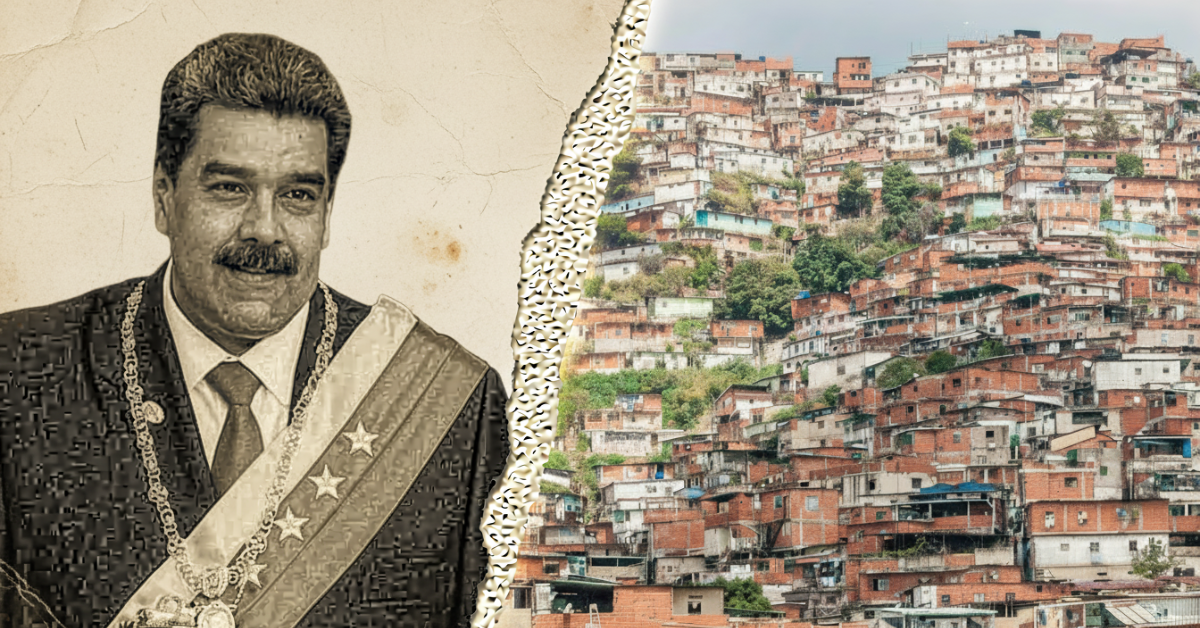
On January 3, 2026, U.S. forces delivered a devastating blow to the authoritarian regime led by Nicolás Maduro, ultimately capturing Maduro and his wife. They were flown to the United States and are currently detained at the Metropolitan Detention Center in New York (Reuters, 2026). According to the U.S. Department of Justice, both face charges related to large-scale drug trafficking conspiracies.
Soon after, U.S. President Donald Trump announced at a press conference that “the U.S. will run the country until such time as we can do a safe, proper, and judicious transition.” He added that the United States “can’t take the chance that someone else takes over Venezuela who doesn’t have the interests of Venezuelans in mind.” It remains unclear what this proposition entails, but sources suggest that Maduro’s vice president, Delcy Rodríguez, is currently serving as the country’s interim president.
President Trump alluded to U.S. oil companies operating in Venezuela to rebuild the long-nationalized oil industry, emphasizing that the country holds the world’s largest oil reserves. This proposal immediately raises concerns. In particular, it suggests that economic restructuring may precede democratic reconstruction, or possibly even replace it.
Maduro’s capture marks a dramatic moment in recent Latin American history. After years of authoritarian rule, economic collapse, mass emigration, and institutional decay, the sudden removal of Venezuela’s president has prompted celebrations. These reactions are especially visible among parts of the Venezuelan diaspora and across Latin America more broadly.
For many, this moment feels like liberation. The dictatorship has ended, and a long nightmare may finally be over.
However, history urges caution. Removing a dictator is not the same as building a democracy. In fact, distinguishing between the two has been a central theme in Latin America’s modern political experience.
Why the Fall of Maduro Feels Like Liberation
There is little doubt that Maduro’s regime was authoritarian. Former U.S. President Jimmy Carter once described Venezuela as having one of the most reliable vote-counting systems among the countries he monitored. Even so, evidence indicates that Maduro lost the 2024 election to opposition candidate Edmundo González.
Despite this loss, Maduro relied on his control over Congress, the judiciary, and the military to override the election results and retain power (Corrales & Kronick, 2025). When protests followed, the regime arrested thousands of political opponents and violently suppressed demonstrations. At least 24 people were killed during the unrest (Amnesty International, 2024). González later fled Venezuela and sought asylum in Spain.
Beyond political repression, Maduro’s government devastated the Venezuelan economy. Years of mismanagement, corruption, and international isolation pushed the country into deep crisis. By the end of 2025, hyperinflation exceeded 500 percent (Moleiro, 2025). Meanwhile, an estimated eight million Venezuelans fled in search of basic security and dignity.
Given these conditions, it is understandable that many Venezuelans are elated by Maduro’s fall. The event brings renewed hope for freedom, dignity, and prosperity. Still, hope alone does not guarantee a successful transition. Importantly, not all post-authoritarian transitions lead to democracy.
U.S. Intervention in Venezuela and the Historical Warning Signs
President Trump’s proposal for a “temporary rule” in Venezuela echoes familiar historical patterns. In Latin America, these words carry significant weight. They often signal foreign intervention framed as stabilization, but followed by prolonged influence over political institutions, economic systems, and national sovereignty.
Historically, the United States has intervened in the region under the banner of restoring order, protecting democracy, or preventing chaos. Yet these U.S. interventions in Latin America have frequently produced weakened institutions, dependent economies, and governments lacking democratic legitimacy from the outset.
A previous Suru analysis examined Cuba’s initial liberation from Spanish rule, when the United States installed General Leonard Wood as military governor (Tuttle, 2025a). Although Cuba had formally gained independence, the U.S. effectively ruled the island for four years. During this period, Wood implemented reforms in education, infrastructure, and public health.
Nevertheless, this “temporary” U.S. military government reshaped Cuban sovereignty in lasting ways. Elections were permitted only after the United States defined voter eligibility rules. Even then, continued interference ensured that elected leaders prioritized U.S. economic interests. The lesson was not that reform failed. Rather, reform imposed from above altered sovereignty in ways Cubans never consented to.
The Broader Pattern of U.S. Regime Change in Latin America
Cuba was not an isolated case. Washington has also played a role in regime change efforts in Guatemala, Chile, Nicaragua, and Panama, among others (Quintero, 2025). Although these governments often committed human rights abuses and mismanaged their economies, U.S. intervention rarely produced positive or sustainable outcomes.
In many cases, these interventions have been driven more by U.S. strategic and economic interests than by genuine concern for local populations. This pattern extends beyond Latin America. Countries such as Iraq and Afghanistan reveal similar dynamics, where foreign-imposed regime change undermined democratic ownership.
The central problem is legitimacy. When citizens are denied the ability to shape their own transition, they often view new governments as imposed or client regimes. President Trump’s comments suggest that Venezuela may face a comparable dilemma.
As a result, stability tends to be fragile and temporary. Markets may open, but they frequently become vulnerable to foreign exploitation rather than genuinely liberated. While external powers can remove a regime, they cannot manufacture legitimacy.
If Venezuelans perceive that political outcomes are decided abroad, the next government risks appearing to lack sovereignty. This perception can provoke backlash, polarize society, and undermine democratic stability, even if elections eventually take place. In this way, the paradox of intervention becomes clear: actions intended to promote democracy can ultimately undermine it.
What a Democratic Transition in Venezuela Would Require
For this moment to become a genuine democratic turning point, several conditions must be met.
First, Venezuelans must retain ownership of the transition. Any interim authority should be broad and inclusive. It must represent opposition factions, civil society, labor organizations, and marginalized communities, rather than only political elites or actors favored by external powers.
Second, the transition must be explicitly time-bound. Clear milestones toward constitutional normalization and free, internationally monitored elections are essential. Open-ended “temporary” governance structures invite abuse.
Third, international involvement should be multilateral rather than unilateral. Regional and global oversight can enhance legitimacy and reduce perceptions of neo-imperial control. No single foreign power should dominate Venezuela’s democratic transition.
Fourth, economic assistance should prioritize institutional rebuilding and social protection. Rapid privatization or extractive access alone will not restore trust or stability. Venezuela’s recovery depends on rebuilding public services and economic opportunity.
Finally, accountability must be paired with reconciliation. While justice is necessary, cycles of revenge have historically damaged more democracies than they have saved. Truth-seeking mechanisms and legal clarity are critical to preventing future instability.
Conclusion: Why U.S. Intervention in Venezuela Will Shape the Region
Latin America is facing a growing legitimacy crisis, as citizens increasingly lose faith in democratic institutions. At the same time, the United States is losing credibility as a democratic model (Tuttle, 2025b). Against this backdrop, U.S. intervention in Venezuela carries implications far beyond the country’s borders.
What happens next will shape regional perceptions of democracy, sovereignty, and foreign influence. It will affect migration patterns and regional stability. It will also determine whether the United States will finally be viewed as a partner or once again as a patron.
Although the fall of a dictator may feel like victory, history shows that liberation does not guarantee self-government. Removing Maduro may be necessary, but it is not sufficient. Venezuelans must reclaim genuine political agency over their institutions, economy, and collective future.
If this transition empowers that agency, it could mark a rare and hopeful break from the past. If it does not, it risks becoming another tragic chapter in Latin America’s long history of foreign interventions followed by lasting harm.
For now, the world should focus not on speed or spectacle, but on restraint, legitimacy, and humility.
Further Reading
For additional perspectives on accountability, humanitarian consequences, and regional institutional risks connected to political transitions in Latin America, readers may also be interested in:
- Accountability of Former Presidents — An examination of how post-authoritarian societies balance justice, reconciliation, and institutional stability after regime change.
- The Refugee Crisis in Venezuela — A detailed look at the humanitarian and regional consequences of political collapse, displacement, and prolonged instability.
- Brazil’s Sociopolitical Cataclysm: The Dangers of Unchecked Military Institutions — A comparative case highlighting how weakened civilian oversight of the military can undermine democratic governance in the region.
References
Amnesty International. (2024, April 15). Venezuela: Alarming persecution of critical and dissident voices intensifies. https://www.amnesty.org/en/wp-content/uploads/2024/04/AMR5379492024ENGLISH.pdf
Corrales, J., & Kronick, D. (2025). How Maduro stole Venezuela’s vote. Journal of Democracy, 36(1), 36–49. https://doi.org/10.1353/jod.2025.a947882
Moleiro, A. (2025, December 27). Prices soar and Venezuela’s economy struggles under Trump’s pressure: ‘People are living day to day’. EL PAÍS. https://english.elpais.com/international/2025-12-27/prices-soar-and-venezuelas-economy-struggles-under-trumps-pressure-people-are-living-day-to-day.html
Reuters. (2026, January 4). Trump says U.S. will run Venezuela after U.S. captures Maduro. Reuters. https://www.reuters.com/world/americas/loud-noises-heard-venezuela-capital-southern-area-without-electricity-2026-01-03/
Quintero, V. (2025, November 14). U.S. interventions in Latin America: Implications for Venezuela. Suru Institute. https://suruinstitute.com/us-interventions-latin-america-venezuela/
Tuttle, S. (2025a, September 14). Democracy in Latin America is in crisis—why it matters for the U.S. Suru Institute. https://suruinstitute.com/democracy-in-latin-america/
Tuttle, S. (2025b, September 21). Leonard Wood in Cuba: The U.S. military government and its lasting legacy. Suru Institute. https://suruinstitute.com/leonard-wood-in-cuba-us-military-government/