

Abstract
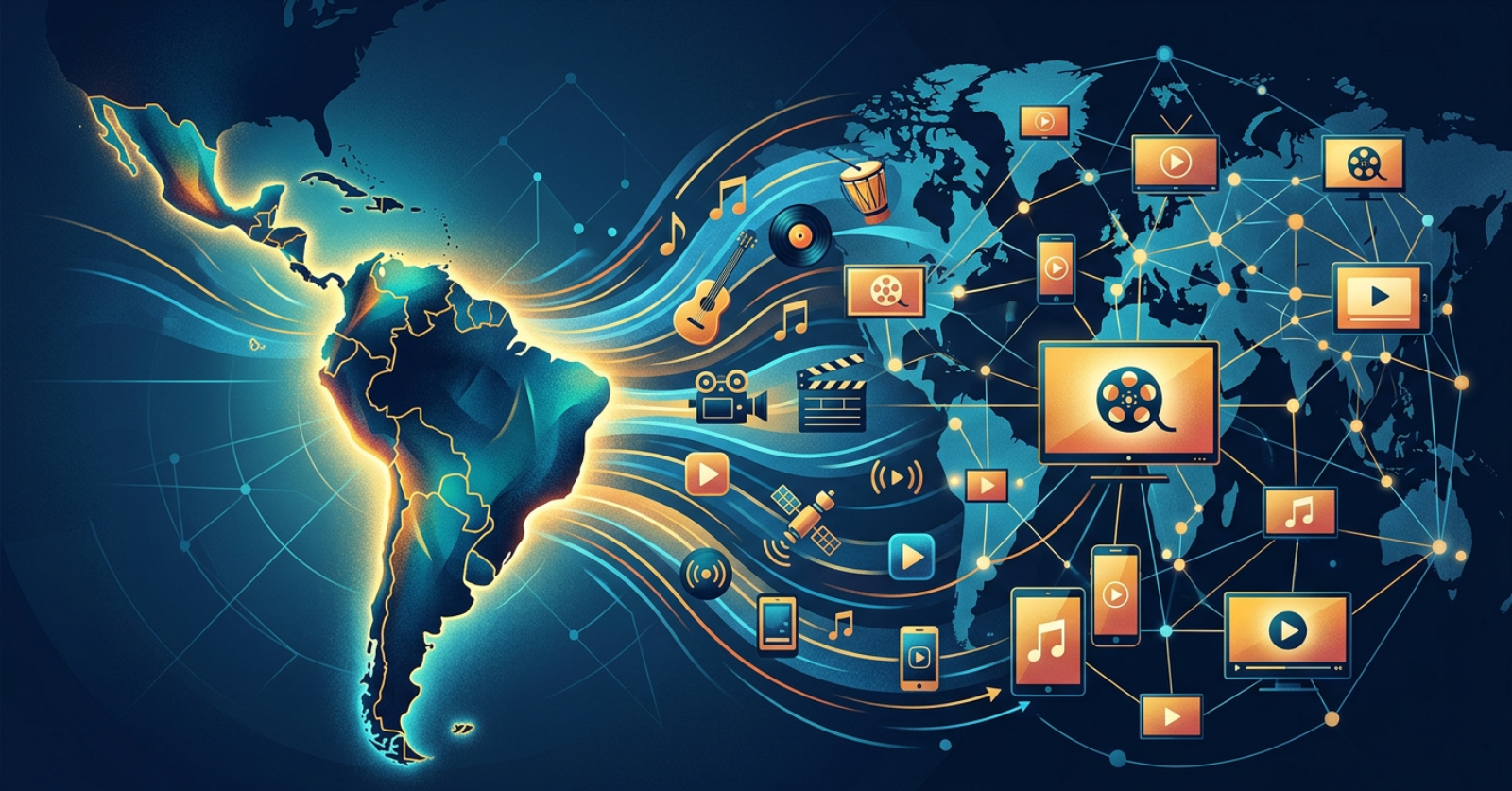
Latin American culture is gaining unprecedented global visibility through music, film, and streaming platforms. From international pop icons to globally distributed television series, cultural production from the region increasingly circulates across digital entertainment networks. This article examines the rise of Latin American soft power and asks whether cultural visibility translates into economic influence. While artists and productions from the region are reaching global audiences at an unprecedented scale, the economic infrastructure that organizes the entertainment industry remains concentrated in a small number of multinational companies, most of them based in the United States. By examining developments in global media markets, the Global Soft Power Index, and the structure of the streaming economy, the analysis highlights the growing cultural influence of Latin America while identifying the structural limitations that prevent this visibility from becoming sustained economic and geopolitical power.
Keywords: Latin American soft power; Latin American culture; global entertainment economy; cultural influence; streaming platforms; digital entertainment industry; soft power; Latin America
The Global Rise of Latin American Culture
During the Super Bowl LX halftime show in February 2026, Puerto Rican artist Bad Bunny delivered a performance that illustrated the growing cultural soft power of Latin America in the global entertainment industry. Through choreography and Latin American imagery, the performance also included criticism of the Trump administration’s immigration policies.
The reaction was immediate. The White House described the show as “an affront to the greatness of the United States,” claiming that the singer had “slapped his country in the face.” However, the political backlash did little to limit the show’s global reach. Within 24 hours, the performance generated more than 4.1 billion views across television broadcasts, YouTube, and social media platforms (Kaufman, 2026).
This episode reflects a broader shift in global culture. For decades, Anglo-American artists and industries based in the United States and Europe dominated the entertainment landscape. Today, however, artists from many parts of the world are gaining visibility while maintaining strong connections to their cultural roots. This trend also reflects the growing cultural soft power of Latin America on the global stage (Patsch, 2026).
During the performance, the only English phrase Bad Bunny spoke was “God bless America.” He then named each country of the Americas, one by one, as dancers walked across the stage carrying their national flags. The gesture transformed a traditionally patriotic American slogan into a broader political message about the region.
Latin American Culture on the Global Stage
This cultural momentum has not gone unnoticed by international observers. In November last year, The Economist published an article titled “The Culture of Latin America Will Continue Its Global Rise,” highlighting several recent examples of the region’s growing international cultural presence (Birke, 2025). According to the analysis, Latin America has exported music, film, and television for decades. Today, however, these productions circulate more widely and reach global audiences with unprecedented intensity.
A report by WGSN, one of the world’s leading trend forecasting firms, makes a similar argument. The report compares the current cultural moment in Latin America to the European Renaissance (WGSN Insider, 2025). In a global environment shaped by political change and rapid technological development, younger generations are increasingly drawn to cultural expressions associated with identity, authenticity, and belonging.
As a result, Latin America is emerging as an important source of creative inspiration across multiple industries. Its influence can be seen not only in music and film, but also in gastronomy, fashion, and design. Yet this cultural expansion raises an important question: what does this growing influence actually mean in terms of economic power?
Soft Power and Global Culture
For much of the twentieth century, the global entertainment landscape was relatively easy to interpret. Hollywood dominated the international film industry, while major record labels based in New York and London shaped the global music market. The result was a relatively stable cultural hierarchy in which peripheral regions could export talent but rarely set the industry’s rules.
Within this system, a particular form of international influence also emerged. In the early 1990s, political scientist Joseph Nye (1990) introduced the concept of soft power, describing the ability of countries to influence others not through force, but through the appeal of their culture, values, and narratives.
Films such as Top Gun did more than fill movie theaters around the world. They also projected a recognizable vision of individual prosperity and American military superiority, packaged in a glamorous and highly consumable format. Audiences around the world absorbed these ideas alongside the stories unfolding on screen. For decades, the United States was the primary beneficiary of this form of cultural influence.
Today, however, the growing prominence of Latin American artists and productions suggests the possibility of new sources of Latin American soft power in the global cultural landscape.
The rise of the internet and streaming platforms began transforming the entertainment industry. Platforms such as Netflix, Spotify, and YouTube removed many of the traditional gatekeepers that once controlled access to global audiences. Songs, television series, and films produced outside traditional entertainment centers increasingly began to appear in global rankings and major award ceremonies, including the Oscars and the Grammys.
Who Controls the Global Entertainment Economy?
One way to assess this imbalance is through the Global Soft Power Index, published by Brand Finance (Jagodzinski, 2025). The report evaluates how effectively countries project cultural, media, and symbolic influence abroad. In recent editions of the index, countries with large, well-established cultural industries, including the United States and European powers such as France and Italy, continue to dominate the top positions.

At the same time, several Asian countries have deliberately developed cultural industries as instruments of soft power. South Korea, for example, has supported the global expansion of K-pop and television series through public institutions such as the Korea Creative Content Agency. Japan has pursued similar strategies through initiatives such as Cool Japan, designed to promote the international circulation of anime, manga, and Japanese design (Courmont, 2023; Tavares, 2025).
Brazil and Argentina also appear in the index, projecting strong cultural and sporting identities. However, the ranking highlights an important structural difference. While some countries have successfully organized their cultural production at a global industrial scale, others continue to generate influential symbols and cultural products without fully controlling the infrastructures that sustain the industry. As a result, cultural visibility does not always translate into durable influence.
The Economic Infrastructure of Global Entertainment
The structure of the global entertainment economy helps explain why this imbalance persists. Data from the Fortune Global 500 illustrate how concentrated the industry remains (Fortune, 2025). The largest entertainment companies in the world are still overwhelmingly based in the United States.
Among the top firms by revenue are Comcast—parent company of NBCUniversal—with roughly $123 billion in annual revenue; The Walt Disney Company with $94.4 billion; Netflix with $43.3 billion; Warner Bros. Discovery with $39.3 billion; and Paramount Global with $29.2 billion.
This corporate landscape reveals an important structural reality. Stories, music, and cultural products may now circulate across multiple regions of the world, but the economic infrastructure that organizes the global entertainment market remains concentrated in the same place.
In other words, Latin America increasingly exports stories, sounds, and cultural identities that feed the global digital entertainment economy. Yet the region rarely controls the platforms, data systems, and technologies that transform those cultural flows into long-term economic and geopolitical power. This remains one of the central limitations of Latin American soft power today.
Further Reading
To deepen the discussion on cultural influence, digital infrastructure, and social dynamics in Latin America, readers may also find the following analyses of interest:
- Digital Sovereignty in Latin America — An examination of how control over digital infrastructure, data flows, and technological platforms shapes the region’s autonomy in the global digital economy. The article explores the strategic implications of platform dominance and the challenges Latin American countries face in asserting greater control over their digital ecosystems.
- Social Resilience in Latin America — An analysis of how communities across the region adapt to structural challenges through informal networks, everyday practices, and collective strategies that sustain social stability despite economic and institutional pressures.
- Language as a Tool for Social Transformation — A reflection on how language shapes social meanings, identities, and political discourse. The article explores how linguistic practices can influence social organization, cultural narratives, and processes of change in societies facing inequality and institutional tension.
References
Birke, S. (2025, November 12). The culture of Latin America will continue its global rise: Everything from music to books, and from films to podcasts. The Economist. https://www.economist.com/the-world-ahead/2025/11/12/the-culture-of-latin-america-will-continue-its-global-rise
Buenos Aires Times. (2025, May 6). Argentina’s “El Eternauta” tops Netflix global chart for non-English series. https://www.batimes.com.ar/news/culture/argentinas-el-eternauta-tops-netflix-global-chart-for-non-english-series.phtml
Courmont, B. (2023, December 5). Le soft power en Asie : Nouvelles formes de pouvoir et d’influence. IRIS. https://www.iris-france.org/180646-le-soft-power-en-asie-nouvelles-formes-de-pouvoir-et-dinfluence/
Fortune. (2025). Fortune Global 500. https://fortune.com/ranking/global500/
Jagodzinski, K. (2025, February 20). Global soft power index 2025: The shifting balance of global soft power. Brand Finance. https://brandfinance.com/insights/global-soft-power-index-2025-the-shifting-balance-of-global-soft-power
Kaufman, G. (2026, April 3). Show de Bad Bunny no Super Bowl é o mais assistido de todos os tempos. Billboard Brasil. https://billboard.com.br/show-bad-bunny-super-bowl-mais-assistido-tempos/
Nye, J. S. (1990). Soft Power. Foreign Policy, (80), 153–171. https://doi.org/10.2307/1148580
Patsch, S. (2026, February 20). Soft power latino: Identidade como força global. Forbes Brasil. https://forbes.com.br/forbes-life/2026/02/soft-power-latino-identidade-como-forca-global/
Tavares, M. (2025, June 16). Conexão Ásia: “Soft power”, a força do intangível. Propmark. https://propmark.com.br/conexao-asia-soft-power-a-forca-do-intangivel/
WGSN Insider. (2025, November 7). Renascimento latino: A força criativa que está redefinindo o consumo global. WGSN. https://www.wgsn.com/pt/blog/renascimento-latino-forca-criativa-que-esta-redefinindo-o-consumo-global