

Economic Management of the Pandemic in Argentina: A Regional Comparison
Argentina was hit particularly hard by the arrival of COVID-19 and the implementation of strict quarantine measures (IMF, 2020). The limited effectiveness of these measures, combined with their high economic cost, led the population to question the economic management of the pandemic in Argentina.
This debate cannot be analyzed in isolation. It is also worth asking whether other economies suffered similar impacts and, if so, what explains the differences in outcomes.
The Pandemic as a Basis for International Comparison
One of the most relevant aspects of the crisis was that it affected the entire world, and almost simultaneously. This makes it possible to directly compare the responses of different governments and their economic results (OECD, 2020).
When the same event affects all countries in a broadly similar way, observed differences can be attributed, to a large extent, to the economic policies adopted during the pandemic in each country. From this perspective, the crisis serves as a comparative baseline for evaluating macroeconomic performance across countries.
The Macroeconomic Performance Index (MPI-USAL)
To evaluate this proposition, this analysis relies on the recently published Macroeconomic Performance Index (MPI-USAL) known in Spanish as the IPM-USAL, developed by the Universidad del Salvador (Marcarian et al., 2020).
In the first quarter of 2020, Argentina’s MPI-USAL score was the lowest among the eleven countries included in the sample. By the second quarter, the index had fallen by 71 percent. This decline was the largest recorded among all countries analyzed.
In summary, according to the MPI-USAL, Argentina exhibited the weakest macroeconomic performance during the pandemic.
Regional Comparison and Social Outcomes
In regional terms, Argentina has consistently performed worse than Brazil, Chile, Colombia, and Paraguay since 2017. Strong macroeconomic performance not only creates opportunities for business activity but also produces concrete social outcomes.
Several regional cases are illustrative. Paraguay closed the year 2000 with a poverty rate of 57.7 percent. By 2019, this figure had fallen to 23.5 percent, substantially lower than Argentina’s. Chile reduced poverty from 36 percent to 8.6 percent over the same period. In Colombia, poverty declined from 53.7 percent in 2002 to 35.7 percent in 2019.

It is worth noting that the MPI-USAL scores of these countries were consistently higher than Argentina’s and displayed greater stability over time. All began the millennium with similar poverty levels. However, after two decades of more orderly macroeconomic management, Paraguay, Chile, and Colombia now exhibit significantly lower poverty rates than Argentina, where poverty stands at 40.9 percent of the population.
Macroeconomic Volatility and Lack of Predictability
Since 2017, Argentina’s MPI-USAL score has followed a downward trend. At the same time, the index for the other countries analyzed has remained relatively stable. This contrast highlights a complementary factor: macroeconomic volatility.
Stability is a key determinant of economic growth. Countries that grow tend to be more stable, and the reverse is also true. Argentina not only shows the weakest relative performance but also the highest level of variability in its macroeconomic index.
A lack of predictability limits the ability of consumers and producers to plan, invest, grow, and develop. In highly volatile contexts such as Argentina’s, these decisions are largely undermined. Economic growth in unstable environments is unlikely to be sustainable. Argentina’s economic history provides multiple examples of this pattern.
Final Reflection
Argentina has endured many years of poor macroeconomic management, and the results are evident. The pandemic did not create these problems; it merely intensified long-standing structural weaknesses.
To reverse this trend, the first step must be the adoption of policies aimed at improving macroeconomic stability and strengthening the overall health of the economy.
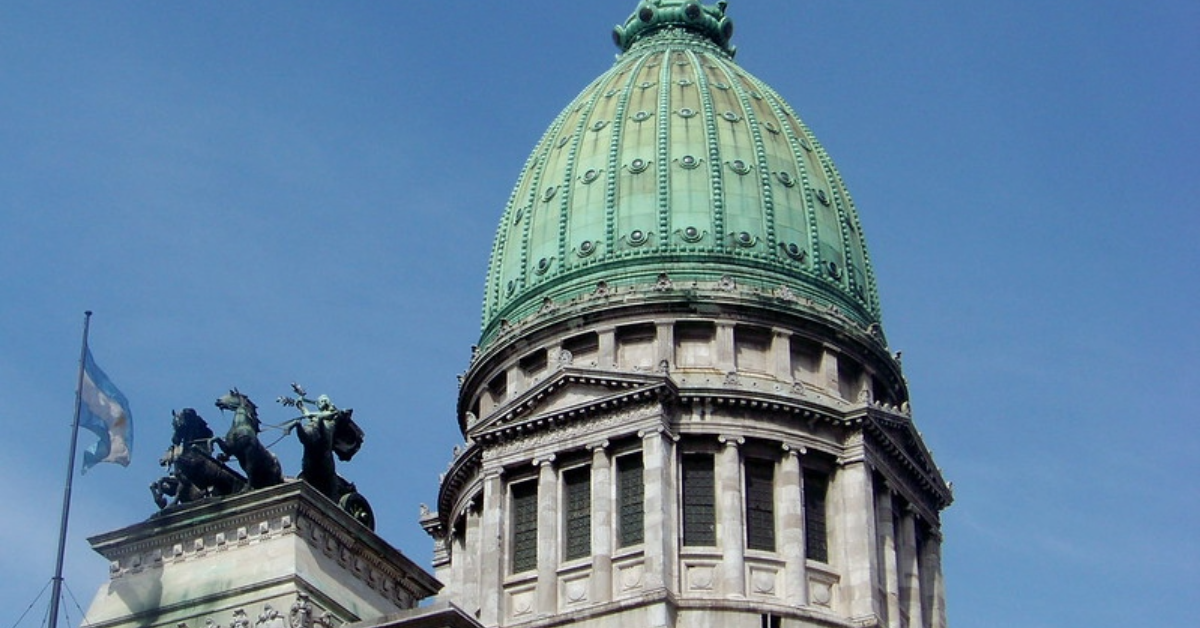
Dome flickr photo by jglsongs shared under a Creative Commons (BY) license
Recommended Readings (Editorial Note)
The following articles are included as contextual references to expand on issues of macroeconomic stability, inflation, and long-term structural dynamics in Argentina. These readings were not part of the author’s original analytical framework but are presented here as supplemental material:
- Macroeconomic Stability and Poverty in Argentina — An analysis of the relationship between macroeconomic stability and social inequality.
- Why Is Inflation So High in Argentina? — An examination of contemporary inflationary dynamics and their economic impacts.
- Argentina Economic History — A broader look at long-term structural trends in the Argentine economy.
- COVID and Monopoly Power: The Case in Argentina — A reflection on market structure and concentration in the context of the pandemic’s economic disruption.
References
International Monetary Fund. (2020, April 15). COVID-19 — Impact and policy considerations. G-20 Surveillance Note. https://www.imf.org/external/np/g20/pdf/2020/041520.pdf
Marcarian, L., Sisti, E., & Hernández, M. (2020). Índice de performance macroeconómica (IPM-USAL): II trimestre de 2020. Análisis por país. Universidad del Salvador, Facultad de Ciencias Económicas y Empresariales. https://fceye.usal.edu.ar/
OECD. (2020). COVID-19 in Latin America and the Caribbean: Regional socio-economic implications and policy priorities. OECD Policy Responses to Coronavirus (COVID-19). https://doi.org/10.1787/93a64fde-en