

Introduction: more than just a trade dispute
In early July 2025, Washington transformed the economic landscape by imposing a 50% tariff on Brazilian exports. This decision marked the beginning of a new chapter in the dispute over digital sovereignty in Latin America. The White House framed the tariff as a means of applying political pressure on the Federal Supreme Court (STF), which was investigating former President Jair Bolsonaro for allegedly attempting a coup. However, the official documentation concealed a broader and less acknowledged rationale: the claim of “unfair competition” posed by Brazil’s state-run instant electronic payment system, PIX, against major U.S. companies like Visa and Mastercard.
The executive order, signed by Donald Trump, not only strained relations between the two nations but also raised concerns about the potential for further escalation. It revealed a conflict deeper than a simple trade war, with technological and digital control of Latin America at stake. In this region, data and digital infrastructure have become vital strategic resources.
Big Tech lobbying and political influence
A joint investigation by Agência Pública and the Latin American Center for Investigative Journalism (CLIP), titled “The Invisible Hand of Big Tech,” revealed the extensive power network that companies like Google, Amazon, Meta, and Microsoft have built in the region over the years. These companies do more than offer services; they function as political actors, capable of shaping laws, influencing governments, and guiding sovereign decisions.
One of their most well-known tactics is the “revolving door” phenomenon: former public officials transition into the private sector, bringing with them a valuable network of contacts and insider knowledge of the government. In Brazil, more than 50 lobbyists, including those connected to former officials such as Arthur Pereira (currently at Meta), have been active in the Brazilian Congress, attempting to influence key regulatory processes.
In this environment, Bill 2630 of 2022 (PL das Fake News) aimed to combat digital disinformation and prohibit the use of unidentified automated accounts. It also proposed establishing a regulatory authority to oversee digital platforms. While presented as a measure to enhance digital transparency, the involvement of these dominant platforms allowed them to legitimize their operations, hinder competitors, and maintain significant leverage with the government.
The phenomenon reoccurs throughout the region:
- In Mexico, Google and Meta organized forums on digital regulation.
- In Argentina, Amazon and Microsoft combined technology infrastructure contracts with political lobbying.
- In Chile, Meta and Google lobbied for net neutrality laws.
The pattern is clear: direct contact with legislators, corporate influence, and media campaigns aimed at shaping a favorable regulatory environment.
Digital colonialism and regional dependence
The influence of Big Tech is no longer restricted to tax incentives or political corridors; it now extends into legislation, the economy, and regional technology policy. Several experts are describing this phenomenon as digital colonialism.
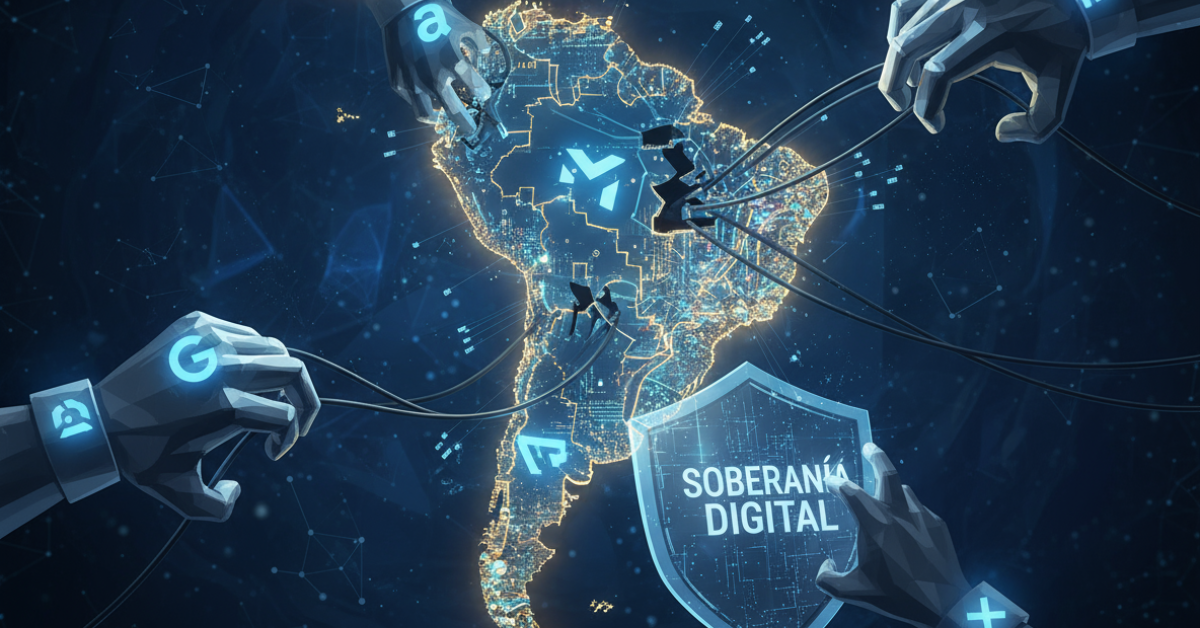
In Latin America, Big Tech’s influence is reshaping digital sovereignty by intertwining foreign corporate interests with economic, legislative, and technological factors. In a rapidly digitizing environment, the concentration of technological power in the hands of a few raises critical questions regarding information sovereignty, state autonomy, and digital democracy. Increasingly, the rules governing the digital landscape are no longer established in parliaments but are instead dictated by the headquarters of companies in Silicon Valley.
Infrastructure and power: the rise of data centers
Control of digital infrastructure has become a crucial battleground. In September of this year, President Lula da Silva’s government introduced Provisional Measure 1,318 of 2025, which established the Special Taxation Regime for Data Center Services (ReData). The plan aims to attract investment and enhance the nation’s technological capacity through tax incentives, including the elimination of federal taxes on equipment and the promotion of renewable energy use.
The government’s strategy promises digital sovereignty, decentralization, and technological advancement. However, critics, as highlighted in a report by the Brazilian agency Aos Fatos, argue that the anticipated tax benefits will primarily advantage large multinational technology companies. These corporations could build or expand their data centers at significantly reduced costs, thereby widening the gap with local providers and increasing their reliance on foreign infrastructure. Furthermore, concerns have been raised about the high water and energy consumption associated with these facilities, which have troubling social and environmental consequences. The construction of data centers in areas with cheap land and labor exacerbates these issues.
Brazil and Mexico consolidate their position as regional investment hubs:
- In Mexico, CloudHQ announced projects worth more than $7 billion.
- In Brazil, ReData is driving regional leadership with 162 complexes that account for 60% of the Latin American market.
In Chile, however, social resistance halted a Google data center due to its high water consumption, reminding us that digital development also leaves an environmental footprint.
Artificial intelligence and digital sovereignty in Latin America
The rise of artificial intelligence (AI) has created new tensions between technological innovation and digital sovereignty. Countries such as Mexico, Argentina, Brazil, and Chile are currently discussing legal frameworks, although these efforts are still incomplete. Chile is collaborating with UNESCO to establish ethical guidelines for AI, while Brazil is leading the way in infrastructure development and technological research, according to the Latin American AI Index (2024), published by ECLAC.
The absence of common standards allows technology corporations to dictate the rules before governments can, exacerbating regulatory disparity in Latin America.
Media power and public opinion
The influence of Big Tech is evident in its ability to shape public opinion. During the 2022 Brazilian elections, widespread disinformation on platforms such as WhatsApp and Telegram prompted the Superior Electoral Court to take action. In Argentina, TikTok demonstrated how algorithms can direct political content specifically toward younger voters.
Conversely, initiatives such as Google News Showcase in Brazil have led to financial dependence for local media outlets. Since 2020, this program has established partnerships with Brazilian media organizations to pay for news curation. While marketed as support for local journalism, it has resulted in a new form of economic reliance, with many media outlets’ income now tied to their contractual agreements with Google.
This situation enhances Google’s role as a dominant intermediary in the information landscape, diminishing the editorial independence of the media ecosystem.
As Joshua Benton discusses in Nieman Lab, this three-year, billion-dollar initiative does not focus primarily on increasing Google’s revenue or solving the media crisis. Instead, it aims to generate positive press and reduce regulatory scrutiny on the company, all while maintaining control over which content and partners benefit from the program.
Conclusion: geopolitics and digital sovereignty in Latin America
Today, millions of Latin Americans rely on WhatsApp, Instagram, and Google for communication, staying informed, and managing their digital finances. This reliance on technology concentrates economic and political power in a few companies, impacting privacy, financial stability, and digital rights.
The rise of Big Tech demonstrates that technology is not neutral. It represents a field of geopolitical contestation that challenges digital sovereignty in Latin America and the ability of states to maintain their technological autonomy.