

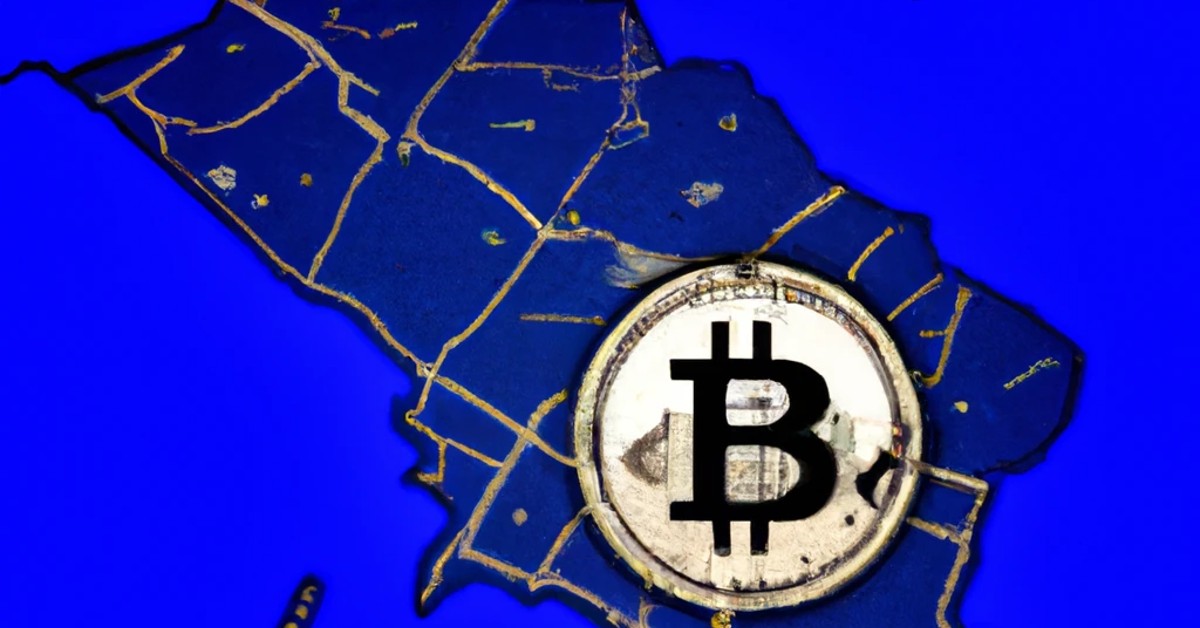
Since its beginnings, the financial system has inspired suspicion. The 2008 financial crisis, which plunged the world into a prolonged recession, deepened public mistrust of big banks and opened the door for alternatives like Bitcoin. Years later, this same mistrust would play a central role in the Bitcoin Law El Salvador, the world’s first national experiment in adopting cryptocurrency as legal tender.
Only six weeks after Lehman Brothers fell, the person or group behind the pseudonym Satoshi Nakamoto published the document that launched Bitcoin. This moment set the foundation for the cryptocurrency world with the promise of decentralization, anonymity, and freedom from state control.
When cryptocurrencies appeared, the utopia of escaping centralized financial power gained force. However, this enthusiasm soon gave way to doubts about security, scams, and volatility. Many people wondered how to avoid repeating the mistakes of the laissez-faire banking era.
Despite the rising value of some cryptocurrencies, they still lacked the momentum needed to compete with national currencies. Their use in everyday transactions remained limited. That situation changed when President Nayib Bukele decided to implement the Bitcoin Law El Salvador, making the country the first in the world to adopt Bitcoin as legal tender.
Implementation of the Bitcoin Law in El Salvador
The Bitcoin Law El Salvador was announced in June 2021 at a cryptocurrency conference in Miami. Bukele presented the initiative with optimism, promising more employment, greater financial inclusion, and cheaper remittances for Salvadorans abroad. These goals were especially relevant in a country that, by 2021, had 6.3% unemployment, 37.6% underemployment, and depended heavily on remittances, which accounted for 28% of GDP (Fundación Salvadoreña para el Desarrollo Económico y Social [FUSADES], 2021).
Curiously, Bukele delivered the announcement in English, which excluded much of the Salvadoran population. The decision signaled that the policy was aimed more at the global crypto community than at Salvadoran citizens.
Parliament provided little additional explanation. Controlled by Bukele’s New Ideas party, it approved the Bitcoin Law El Salvador in a five-hour session with limited debate. Article 7 required service providers to accept Bitcoin as payment, while Article 5 granted tax exemptions for Bitcoin capital gains.
Despite the stated intentions, the main beneficiaries of this cryptocurrency law were foreign investors, government officials, and business elites. Although Bukele had criticized the old political establishment, the process resembled the 2001 dollarization: fast, top-down, and with minimal public participation. This pattern mirrors broader regional dynamics discussed in our analysis of democracy in Latin America.
Macroeconomic Consequences After One Year
The rollout began in September 2021. Every citizen who downloaded the government’s Chivo Wallet app received a $30 bonus in Bitcoin. Many used the bonus once and abandoned the app. According to the National Bureau of Economic Research, six out of ten users stopped using Chivo after spending the incentive (Alvarez, Argente, & Van Patten, 2022).
Public skepticism was widespread. Protests erupted across the country. A September survey from the Central American University (UCA) found that nearly 70% of Salvadorans opposed the Bitcoin policy (Reuters, 2021).
After one year, international observers widely labeled the Bitcoin Law El Salvador a failure (Silverman & McKenzie, 2022). According to a former president of the Federal Reserve Bank, less than 2% of remittances arrived through the digital wallet (Alvarez et al., 2022).
Even more concerning was the economic impact. Bukele’s government spent about $100 million purchasing Bitcoin. When the asset lost value, the country lost roughly half of that investment (Arslanian, Donovan, Blumenfeld, & Zamore, 2021). While some argued that the amount was small relative to the national budget, it damaged the country’s reputation with investors.
The International Monetary Fund entered a standoff with the government over its insistence on keeping Bitcoin as legal tender. At the same time, credit rating agencies Fitch and Moody’s downgraded the country and predicted a possible default on its $800 million debt. Fitch estimated that total public debt could exceed 80% of GDP.
Social Problems Linked to the Bitcoin Law El Salvador
The economic uncertainty created by Bukele’s cryptocurrency experiment also produced social consequences. Although it is still early, several indicators suggest worrying trends.
Faced with the possibility of default, the government announced reforms to the pension system. However, the contents and expected outcomes of these reforms remain unclear.
In late May, the Finance Minister announced cuts to public spending, including the elimination of “unnecessary positions,” to free up $50 million per month for gasoline subsidies and inflation relief.
Meanwhile, reporting by The Intercept revealed even more troubling developments: forced displacement of communities living on land earmarked for the new airport in Bitcoin City, a flagship project of Bukele’s crypto vision (Silverman & McKenzie, 2022). These types of social disruptions align with issues we examine in our work on social cohesion in Latin America.
Conclusion
The Bitcoin Law El Salvador was presented as a technological utopia capable of transforming the economy. Instead, it has created exclusion, instability, and deep public mistrust. What was once promoted as a groundbreaking financial innovation increasingly resembles a risky experiment with heavy social costs and an uncertain future.
References
Alvarez, F. E., Argente, D., & Van Patten, D. (2022, April; revised February 2023). Are cryptocurrencies currencies? Bitcoin as legal tender in El Salvador (NBER Working Paper No. 29968). National Bureau of Economic Research. https://www.nber.org/papers/w29968
Arslanian, H., Donovan, R., Blumenfeld, M., & Zamore, A. (2021, October). El Salvador’s law: A meaningful test for Bitcoin (PricewaterhouseCoopers). https://www.pwc.com/gx/en/financial-services/pdf/el-salvadors-law-a-meaningful-test-for-bitcoin.pdf
Fundación Salvadoreña para el Desarrollo Económico y Social. (2021, July 10). Análisis: Remesas familiares en El Salvador. FUSADES. https://fusades.org/publicaciones/ADEC_Remesas%20familiares.pdf
Reuters. (2021, September 2). Majority of Salvadorans do not want bitcoin, poll shows. Reuters. https://www.reuters.com/technology/majority-salvadorans-do-not-want-bitcoin-poll-shows-2021-09-02/
Silverman, J., & McKenzie, B. (2022, July 22). Nayib Bukele’s broken Bitcoin promise: How El Salvador’s crypto experiment faltered. The Intercept. https://theintercept.com/2022/07/22/bitcoin-crypto-el-salvador-nayib-bukele/